What Is the Manufacturing Industry and Why It Matters
The manufacturing industry plays a crucial role in our daily lives. It shapes the products we use, from smartphones to automobiles. This sector boosts the economy and creates jobs, driving innovation and efficiency. As you explore this topic, consider how data-driven practices enhance operational efficiency and improve decision-making in manufacturing.
Key Takeaways
The manufacturing industry is crucial for economic growth, contributing significantly to productivity and job creation.
AI and automation are transforming manufacturing, enhancing efficiency and enabling smart factories for better performance.
Sustainability is becoming a priority, with companies adopting practices that align with environmental goals and reduce waste.
Manufacturing Industry Overview
Key Components of Manufacturing
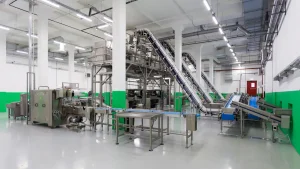
The manufacturing industry encompasses a wide range of activities that transform raw materials into finished products. This sector is vital for economic growth and job creation. In fact, it contributes significantly to national and regional economies by driving innovation and productivity. You might be surprised to learn that manufacturing accounts for about 35% of productivity growth and 60% of exports in many countries.
Within the manufacturing industry, several sectors stand out. Here’s a quick look at some of them:
Sector Description | Score |
|---|---|
Manufacturing of medical and dental instruments | 49.43 |
Manufacturing of jewellery (genuine and imitated) | 40.79 |
Manufacturing of aircraft and spacecraft parts | 40.00 |
Repair and maintenance of aircraft and spacecraft | 36.00 |
Manufacturing of motor vehicles | 35.21 |
Manufacturing of wearing apparel and accessories | 35.00 |
Manufacturing of motorcycles and bicycles | 32.14 |
Repair of machinery | 32.00 |
Manufacturing of communication equipment | 30.86 |
Manufacturing of watches and clocks | 30.21 |
You can see how diverse the manufacturing landscape is! Each sector employs different processes to create products. Common manufacturing processes include:
Manufacturing Process | Description |
|---|---|
Powder Bed Fusion | Methods like Selective Laser Sintering (SLS) create parts from powder. |
Electron Beam Melting (EBM) | Fuses metals using heat from an electron beam in a vacuum. |
Wire Arc Additive Manufacturing (WAAM) | Utilizes an electric arc with welding wire to build shapes. |
Laser Metal Direct Energy Deposition (DED) | Employs metal feedstock and laser technology for fabrication. |
Binder Jetting (Sintering) | A cost-effective method of printing from powder materials. |
Understanding these components helps you appreciate the complexity and significance of the manufacturing industry in our daily lives.
Current Trends in Manufacturing
Supply Chain Dynamics
The manufacturing landscape is changing rapidly, especially when it comes to supply chain dynamics. One of the most significant trends is the adoption of AI. This technology is no longer just a concept; it’s becoming a core part of supply chain operations. Companies are embedding AI into their platforms, which enhances efficiency and governance. Here’s a quick look at how AI is impacting supply chains:
Trend Description | Impact on Supply Chains |
|---|---|
Transition from testing AI solutions to embedding AI in platforms for efficiency and governance | |
Connected Intelligence | Integration of AI across various enterprise systems to create an autonomous ecosystem |
You might be surprised to learn that the robotic process automation (RPA) market is projected to exceed $30.85 billion by 2030. This growth indicates that businesses are recognizing the strong returns on investment that come from automating processes. In fact, many manufacturers are moving towards smart factories where robots handle complex tasks with precision, especially in competitive sectors like automotive and pharmaceuticals.
Another trend gaining traction is reshoring. Companies are relocating production closer to key markets to improve agility and manage tariff volatility. This shift allows for better visibility and responsiveness to market demands. Countries like India, Indonesia, and Malaysia are leading this movement with initiatives that attract investments in manufacturing. For instance:
India: The Production Incentive Scheme (PLI) encourages investments across 14 critical sectors, including electronics and textiles.
Indonesia: The ‘Making Indonesia 4.0’ policy aims to enhance competitiveness in five manufacturing sectors.
Malaysia: The Industry4WRD strategy focuses on optimizing technology-driven production processes.
As you can see, these countries are positioning themselves as manufacturing hubs by emphasizing proximity to markets and adaptability in response to global changes.
Supply chain strategies are evolving as well. Manufacturers now view supply chains as critical strategic assets. They focus on metrics like visibility and real-time data to enhance resilience and competitiveness. Companies are diversifying their supplier networks and relocating production to mitigate risks from geopolitical tensions and disruptions like pandemics. For example, four out of five Japanese manufacturing companies have diversified their operations since 2020, establishing new facilities in Southeast Asia.
Predictive intelligence plays a crucial role in optimizing these supply chains. It helps manufacturers identify potential issues before they arise. Here are some ways predictive intelligence is making a difference:
Predictive maintenance allows for timely repairs, reducing downtime.
Real-time analytics provide insights into production performance, enabling quick adjustments.
AI analyzes large data sets to find patterns, enhancing decision-making.
Future Scope of Manufacturing in 2026
AI Innovations in Manufacturing
As we look ahead to 2026, the manufacturing industry is poised for significant transformation driven by AI innovations. You can expect to see growth areas and challenges that will shape the landscape. Here are some anticipated challenges:
New metrics that matter: Supply chains are evolving, requiring new metrics that reflect complexities and stakeholder expectations.
More tariffs and trade disruption: Ongoing tariffs and trade disruptions will impact sourcing and costs, necessitating agility in supply chain strategies.
Rising above the chaos: Continuous challenges from global tensions and fluctuating tariffs will require supply chain leaders to focus on strategy and technology.
Policy changes will also play a crucial role in shaping the manufacturing workforce. For instance, the development of a national workforce demand database will guide policy and investment in high-demand occupations. Here’s a quick look at how these changes will impact the workforce:
Evidence Description | Impact on Manufacturing Workforce |
|---|---|
Development of a national workforce demand database | Guides policy and investment in high-demand occupations and critical skill sets |
Creation of over 13,000 new STEM positions | Enhances job opportunities in manufacturing sectors |
Completion of skills development programs by over 450,000 individuals | Increases the skill level of the workforce, aligning with industry needs |
Approval of 24 innovative programs under the Higher Education Sandbox | Expected to produce more than 26,620 high-skilled professionals for strategic industries |
Establishment of four National Semiconductor Training Centers | Develops industry-aligned talent in advanced electronics, strengthening the manufacturing sector’s capabilities |
AI will reshape manufacturing processes in remarkable ways. By 2026, you’ll likely see smart factories where robots perform complex tasks with high precision. This shift will not only improve operational efficiency but also reduce errors, leading to near-zero defect rates. Here are some benefits you can expect:
Increased operational efficiency through continuous production cycles.
Cost savings by minimizing labor costs and waste.
Enhanced customer service with faster order fulfillment.
AI enables robots to self-optimize by continuously monitoring their performance. This capability allows for predictive maintenance and improved productivity. The successful companies in 2026 will recognize that robots are not merely replacements for human workers; they will redefine the nature of work. Training for employees will become essential to leverage robotic capabilities effectively.
Sustainability will also be a key focus in the future of manufacturing. As companies strive for operational excellence, they will adopt practices that align with ESG (Environmental, Social, and Governance) principles. Innovations in sustainability will not only reduce environmental impact but also enhance the total value of manufacturing processes. You can expect to see:
Increased use of renewable energy sources.
Adoption of circular economy principles to minimize waste.
Implementation of technologies that enhance visibility in supply chains, ensuring responsible sourcing and production.
The manufacturing industry is vital for economic growth and innovation. Here are some key takeaways:
A strong manufacturing sector is essential for any advanced economy, as highlighted by Vaclav Smil.
Countries like Germany and China are adopting national strategies to integrate next-generation technologies.
Automation and digitalization enhance efficiency and reduce costs, allowing companies to focus on their core strengths.
As you look ahead, consider how embracing advanced manufacturing can help businesses thrive and contribute to sustainable development goals. 🌍
FAQ
What is the role of supply chain management in manufacturing?
Supply chain management ensures efficient production and delivery of products, optimizing resources and reducing costs.
How does IATF 16949 benefit manufacturers?
IATF 16949 helps manufacturers improve quality management systems, ensuring compliance with automotive industry standards and enhancing customer satisfaction.
Why is sustainability important in manufacturing?
Sustainability reduces environmental impact, promotes responsible sourcing, and aligns with consumer preferences for eco-friendly products.