Essential Manufacturing Industry Cleaning Tips for 2026
Industrial cleaning, particularly in the manufacturing industry cleaning sector, plays a critical role in maintaining safety and efficiency in manufacturing facilities. As you approach 2026, updating your cleaning strategies is essential. Embrace innovative techniques and eco-friendly products to enhance your operations. Prioritize cleanliness in the manufacturing industry cleaning to ensure a safe and productive work environment.
Key Takeaways
Regular deep cleaning is crucial. Aim for daily cleaning in high-contact areas to reduce health risks and maintain safety.
Use eco-friendly cleaning products. These options lower environmental impact and enhance workplace safety, aligning with sustainability goals.
Consider professional cleaning services. They offer expertise, ensure compliance with regulations, and can lead to long-term cost savings.
Why Industrial Cleaning Matters
Safety and Compliance
In the manufacturing industry, safety and compliance are paramount. You must adhere to strict regulations to protect your workforce and maintain operational integrity. Regular industrial cleaning plays a vital role in achieving these goals. Here are some key reasons why:
Preventing Wear and Component Damage: Proper cleaning extends the life of your equipment. By removing contaminants, you protect your investments in precision manufacturing.
Eliminating Jamming and Operational Irregularities: Clean components ensure smooth operation. This prevents sluggish movement and jamming, which can disrupt production.
Reducing Fire and Explosion Risk: Regular cleaning eliminates hazardous residues. This is especially crucial in chemical processing and aerospace applications, where safety is non-negotiable.
Protecting Product Quality: Cleanliness ensures that your products meet specifications. This helps avoid functional defects and non-compliance with quality standards.
Preventing Cascading Production Problems: Cleaning at each production stage prevents small issues from escalating into costly shutdowns.
Reducing Maintenance Costs: Implementing regular cleanliness protocols lowers repair and replacement costs. This is achieved by preventing contamination-related damage.
Meeting Industry Standards and Regulatory Requirements: Compliance with standards like ISO and ASTM is mandatory in many industries. It demonstrates your commitment to safety and quality.
Operational Efficiency
Cleanliness directly impacts operational efficiency in your manufacturing facility. A clean environment fosters productivity and enhances overall performance. Consider the following impacts:
Impact Area | Explanation |
|---|---|
Preventing Wear and Component Damage | Cleanliness prevents contaminants that accelerate wear, extending component life and protecting investments. |
Eliminating Jamming and Irregularities | Clean components ensure smooth operation, preventing sluggish movement and system failures. |
Reducing Fire and Explosion Risk | Regular cleaning mitigates safety hazards from accumulated residues in sensitive environments. |
Protecting Product Quality | Clean components prevent contamination that can lead to product defects and compliance issues. |
Preventing Cascading Production Problems | Cleaning prevents small issues from escalating into larger production inefficiencies. |
Reducing Maintenance Costs | Clean components reduce breakdowns, leading to lower repair and replacement expenses. |
Meeting Industry Standards | Compliance with cleanliness standards is essential for product quality and safety regulations. |
By prioritizing cleanliness in your manufacturing industry cleaning practices, you enhance both safety and efficiency. This commitment not only protects your workforce but also ensures that your operations run smoothly and effectively.
Key Cleaning Strategies for 2026
Regular Deep Cleaning
Regular deep cleaning is essential for maintaining hygiene in your manufacturing facility. Aim to conduct thorough cleaning, disinfection, and sanitization daily. This structured approach helps eliminate contaminants and reduces health risks. Focus on high-contact areas such as machinery, tools, and office spaces. By prioritizing these tasks, you create a safer environment for your employees and customers.
Eco-Friendly Products
In 2026, eco-friendly products are gaining traction in the manufacturing industry cleaning sector. These products not only reduce environmental impact but also enhance workplace safety. Many manufacturers are adopting biodegradable cleaners and sustainable materials. This shift aligns with global sustainability goals and meets the increasing demand for greener practices. By choosing eco-friendly options, you contribute to a healthier planet while maintaining a clean facility.
Technology in Cleaning
Technology is revolutionizing cleaning methods in manufacturing. Advanced washing systems that integrate IoT technology significantly reduce water and energy consumption. These innovations lead to improved turnaround times and cost savings. Additionally, manufacturers are focusing on customized cleaning plans that leverage technology for real-time monitoring and optimization. By embracing these advancements, you enhance operational efficiency and ensure compliance with industry standards.
Tools for Manufacturing Industry Cleaning
Advanced Cleaning Machinery
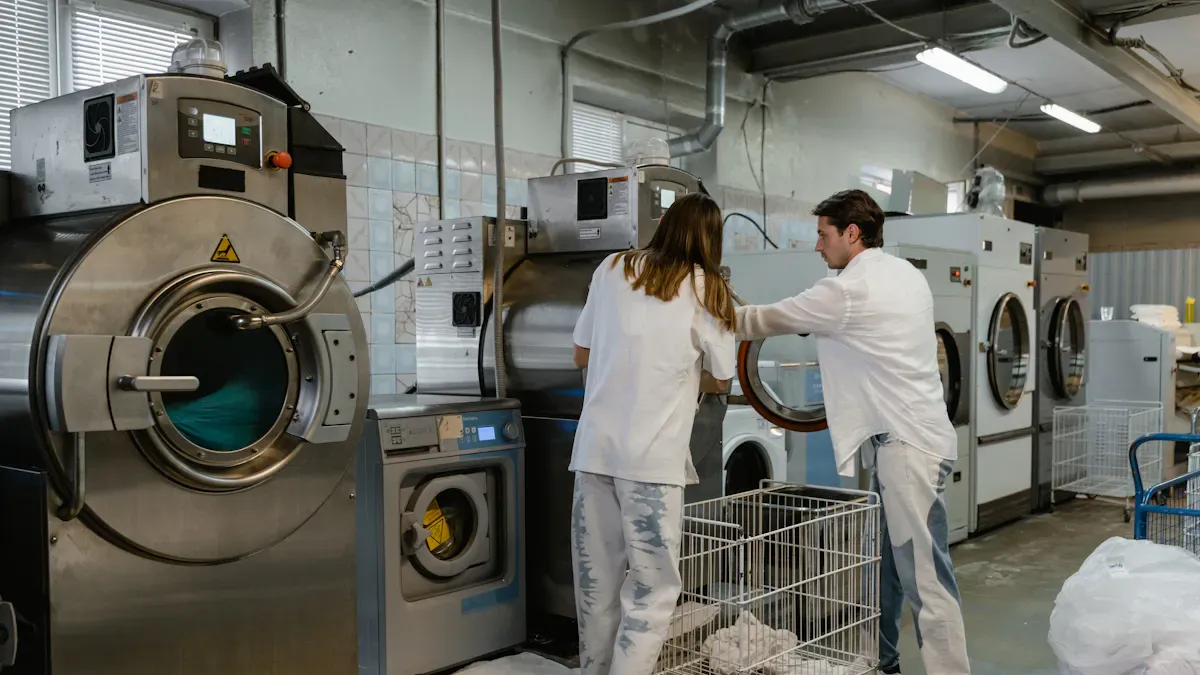
Investing in advanced cleaning machinery significantly enhances the effectiveness of your cleaning processes. The industrial laundry machine market is projected to exceed $7 billion by 2025, driven by hygiene standards and automation. Here are some key features of advanced cleaning machinery:
Evidence Type | Description |
|---|---|
Market Value | The industrial laundry machine market is projected to exceed $7 billion by 2025. |
Efficiency Features | Advanced washing systems with IoT technology enable real-time monitoring and optimize washing cycles. |
Cost Savings | Companies investing in advanced cleaning machinery report improved turnaround times and significant cost savings. |
By utilizing these technologies, you can optimize resource consumption and improve overall cleaning efficiency.
Personal Protective Equipment
Personal protective equipment (PPE) is crucial for ensuring safety during industrial cleaning tasks. Proper use of PPE reduces health risks and protects workers from potential hazards. Here are some essential PPE items for your cleaning staff:
Health Equipment
Cleaning Fabrics
Ear Protection
Face Protection
Body Protection
Foot Protection
These items help prevent injuries and enhance work efficiency. For instance, safety socks can reduce injuries, while chemical protection gear safeguards against hazardous substances. By equipping your team with the right PPE, you create a safer work environment and promote compliance with safety regulations.
Benefits of Professional Cleaning Services
Expertise and Experience
Hiring professional cleaning services brings a wealth of expertise and experience to your manufacturing facility. These specialists understand the unique challenges of the manufacturing industry cleaning sector. They implement effective cleaning protocols tailored to your specific needs. Here are some key contributions they make to safety and hygiene:
Service Type | Contribution to Safety and Hygiene |
|---|---|
Housekeeping and Janitorial | Ensures cleanliness in the environment, reducing contamination risks |
Laboratory Cleaning | Maintains sterile conditions necessary for safe production |
Instrument Sterilization | Prevents cross-contamination in manufacturing processes |
Professional cleaners utilize hygienic designs that minimize areas for bacteria growth. They implement effective cleaning protocols to prevent contamination. Moreover, they ensure compliance with food safety regulations, which is crucial for maintaining product integrity.
Cost-Effectiveness
Investing in professional cleaning services can lead to significant cost savings for your manufacturing operations. While it may seem like an added expense, consider the long-term benefits. Here’s how professional cleaning services can be cost-effective:
Reduced Downtime: Regular cleaning prevents equipment failures and production halts. This minimizes costly downtime and keeps your operations running smoothly.
Lower Maintenance Costs: By maintaining cleanliness, you reduce wear and tear on machinery. This leads to fewer repairs and replacements, saving you money in the long run.
Compliance Assurance: Professional cleaning services ensure that your facility meets industry regulations. This helps you avoid fines and penalties associated with non-compliance.
Implementing effective cleaning strategies is vital for your manufacturing facility’s success. Regular cleaning extends component service life, reduces operational irregularities, and minimizes safety risks. Consider professional cleaning services to achieve optimal results. Prioritize cleanliness to enhance productivity and ensure compliance with industry standards. Your commitment to cleanliness drives success.
FAQ
What are the benefits of using eco-friendly cleaning products?
Eco-friendly products reduce environmental impact and enhance workplace safety. They help you maintain a clean facility while supporting sustainability goals.
How often should I conduct deep cleaning in my facility?
Aim for daily deep cleaning in high-contact areas. Regular cleaning minimizes health risks and maintains a safe work environment.
Why should I consider professional cleaning services?
Professional services bring expertise and tailored cleaning protocols. They ensure compliance with industry standards and can save you money in the long run.