Choosing Industrial Cleaning Chemicals with Safety in Mind
Choosing the right industrial cleaning chemicals is vital for maintaining workplace safety. You must prioritize safety for both employees and the environment when selecting these products. Informed decision-making ensures effective cleaning in hygiene-critical environments. Consider biodegradable formulations of industrial cleaning chemicals that meet environmental standards to enhance safety and promote infection control.
Key Takeaways
Identify the types of contaminants in your workplace to choose the most effective cleaning chemicals.
Understand the difference between cleaners, disinfectants, and sanitizers to match the right product to your cleaning needs.
Always read safety data sheets and use personal protective equipment to minimize risks when handling cleaning chemicals.
Assessing Cleaning Needs
Identifying Contaminants
To select the right cleaning chemicals, you must first identify the types of contaminants present in your industrial environment. Different contaminants require different cleaning approaches. Common contaminants found in industrial settings include:
Grease
Oil
Food residues
Dust
General soil
Understanding these contaminants helps you choose the most effective cleaning solution. For instance, if you deal with grease and oil, you may need a stronger cleaning agent that can break down these substances effectively.
The pH level of cleaning agents plays a crucial role in this process. Cleaning chemicals can range from acidic (pH 0-6) to neutral (pH 7) to alkaline (pH 8-14). Stronger cleaning chemicals, indicated by extreme pH values, can effectively remove specific contaminants but may pose risks to materials and operators. Therefore, knowing the type of contaminants helps you select the right cleaning solution, balancing effectiveness and safety.
Cleaner vs. Disinfectant
Once you identify the contaminants, you need to determine whether you require a cleaner, disinfectant, or sanitizer. Each serves a different purpose:
Cleaners remove dirt, dust, and grime from surfaces. They are essential for maintaining cleanliness but do not necessarily kill germs.
Disinfectants eliminate bacteria, viruses, and fungi on surfaces. Use them in areas where hygiene is critical, such as food preparation zones or healthcare facilities.
Sanitizers reduce the number of germs to a safe level but do not eliminate all pathogens. They are suitable for less critical areas.
Understanding your cleaning requirements is vital. For example, if you are cleaning a food preparation area, disinfection is necessary to ensure safety. In contrast, an office space may only require regular cleaning. Matching the right cleaning chemicals to the surfaces being cleaned avoids damage and ensures effectiveness. Additionally, training employees on safe handling and storage of cleaning chemicals maintains a safe working environment.
Matching Chemicals to Surfaces
Surface Compatibility
When selecting cleaning chemicals, you must consider the surfaces you will clean. Different materials react differently to various chemicals. For example, using an acid-based cleaner on a metal surface may cause corrosion. Here are some key points to remember:
Choose the right cleaning chemicals for specific materials to avoid damage.
Test a small area before applying a new cleaner to the entire surface.
Consult industry standards to guide your choices. Proper matching enhances cleaning efficiency and ensures worker safety.
Understanding pH Levels
The pH level of cleaning chemicals significantly impacts their effectiveness and safety. Here’s a breakdown of how different pH ranges affect cleaning solutions:
pH Range | Type of Solution | Effectiveness and Risks |
|---|---|---|
0-6 | Acid-based solutions | Stronger cleaning power but higher risk of material damage and safety hazards. |
7 | Neutral solutions | Safer, easier to handle, store, and dispose of, but may be less effective in some cases. |
8-14 | Alkaline solutions | Similar to acids, they can speed up cleaning but also pose risks to materials and operators. |
Understanding these pH levels helps you select the right cleaning chemicals for your needs. Always prioritize safety while ensuring effective cleaning.
Handle Cleaning Chemicals Safely
Safety Data Sheets
When you handle cleaning chemicals, always read the labels and safety data sheets (SDS). These documents provide essential information about the chemicals you use. They include details on hazards, safe handling procedures, and first aid measures. Familiarizing yourself with the SDS helps you understand the risks associated with each chemical. Here are key components you should look for:
Chemical Identification: Know the name and composition of the chemical.
Hazard Identification: Understand the potential dangers, such as flammability or toxicity.
First Aid Measures: Learn what to do in case of exposure or accidents.
Safe Handling Procedures: Follow guidelines for safe use, storage, and disposal.
By prioritizing the information in safety data sheets, you can significantly reduce the risk of accidents. In fact, companies that implement mandatory training courses on chemical safety have seen a decrease in the Lost Time Injury Rate (LTIR) from 0.537 in 2023 to 0.422 in 2024. This shows that proper training leads to safer workplaces.
Personal Protective Equipment
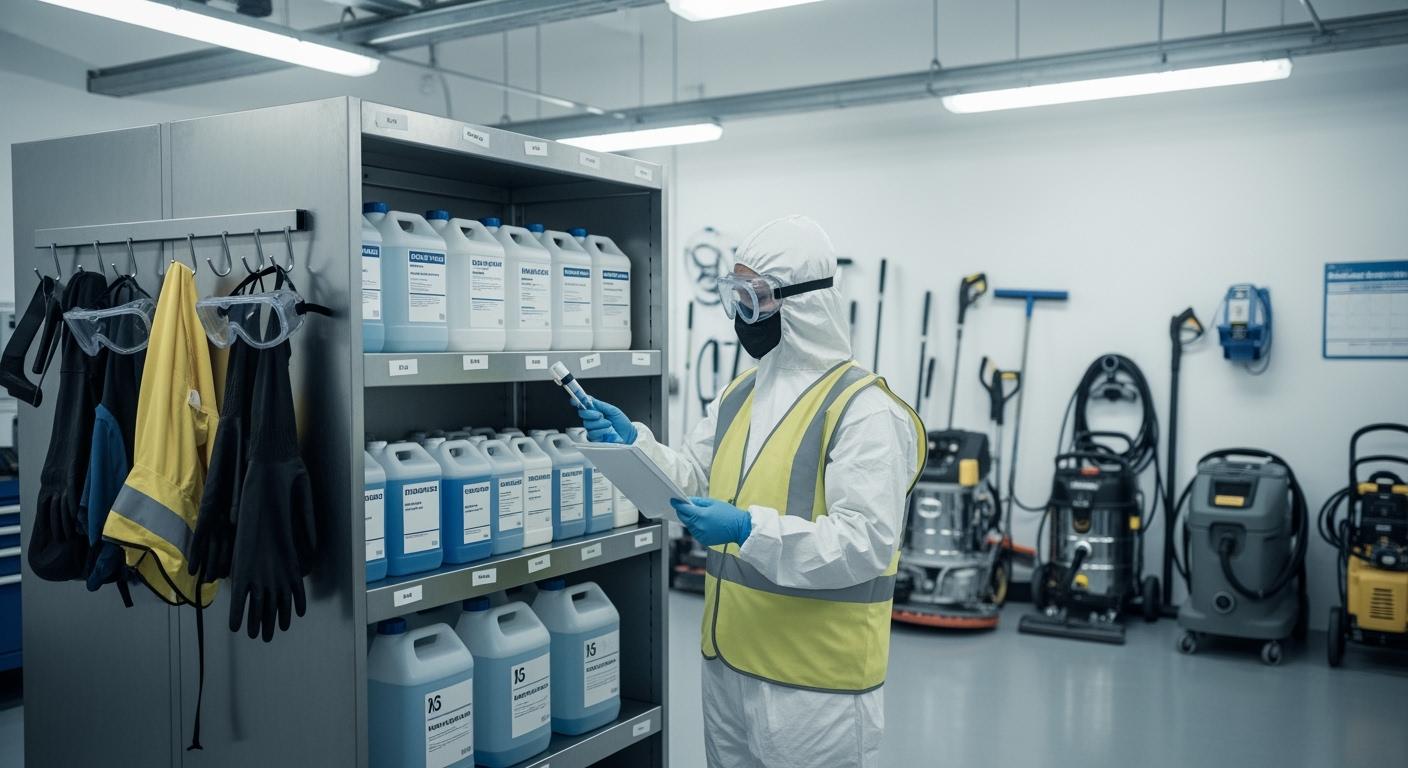
Using personal protective equipment (PPE) is crucial when working with industrial cleaning chemicals. PPE acts as a barrier between you and potential hazards. Depending on the chemicals you handle, you may need different types of PPE, including:
Gloves: Protect your hands from chemical burns and irritation.
Goggles: Shield your eyes from splashes and harmful vapors.
Respirators: Prevent inhalation of toxic fumes.
Aprons or Coveralls: Keep your skin and clothing safe from spills.
Always assess the specific risks associated with the cleaning chemicals you use. Ensure that you wear the appropriate PPE to minimize exposure. Remember, even with proper training and safety data sheets, PPE is your first line of defense against chemical hazards.
By following these guidelines, you can handle cleaning chemicals safely and protect yourself and your coworkers. Implementing safe handling procedures not only promotes a safer work environment but also contributes to overall workplace efficiency.
Proper Storage Practices
Safe Storage Locations
You must choose safe storage locations for your cleaning chemicals. Proper storage prevents spills and contamination. Here are some key points to consider:
Store chemicals in a cool, dry place away from direct sunlight.
Keep them in well-ventilated areas to avoid the buildup of harmful fumes.
Ensure that storage areas are secure to prevent unauthorized access.
Improper storage practices can lead to chemical spills or contamination. For example, if you store incompatible chemicals together, they may react and cause dangerous situations. To help you understand the critical steps for safe storage, consider the following table:
Critical Step | Description |
|---|---|
Proper Segregation | Essential to maintain a safe workplace and prevent catastrophic incidents. |
Compatibility and Hazard Analysis | Helps in identifying potential reactions and hazards associated with chemicals. |
Original Containers
Always keep your cleaning chemicals in their original containers. These containers are designed to safely store cleaning chemicals and provide important information. Labels contain details about hazards, handling instructions, and expiration dates. Using original containers helps you:
Avoid confusion about the contents.
Prevent accidental mixing of different chemicals.
Ensure compliance with safety regulations.
By following these storage practices, you can safely store cleaning chemicals and protect your workplace from potential hazards. Remember, proper cleaning chemical storage is a crucial part of maintaining a safe and efficient work environment.
Dispose of Cleaning Chemicals Responsibly
Understanding Regulations
You must understand local regulations when you dispose of cleaning chemicals. Each region has specific guidelines for hazardous waste disposal. Familiarize yourself with these rules to avoid legal issues and protect your community. Here are some key points to consider:
Check local laws regarding hazardous waste.
Follow guidelines for labeling and storing chemicals before disposal.
Contact local waste management authorities for proper disposal methods.
Improper disposal can expose you and your coworkers to harmful contaminants. It can also lead to significant health issues and environmental contamination. This contamination can affect soil, water systems, and air quality, resulting in long-term ecological damage.
Eco-Friendly Disposal Methods
You can adopt eco-friendly disposal methods to minimize environmental impact. Consider these options:
Use biodegradable cleaning chemicals. They help protect the environment and are easier to dispose of compared to non-biodegradable options.
Establish a designated storage area for industrial cleaning chemicals. This area should have proper ventilation to disperse fumes and prevent accumulation.
Conduct regular inspections to check for leaks, spills, and expiration dates. This practice ensures that you manage chemicals responsibly.
By implementing these eco-friendly methods, you contribute to a healthier environment for future generations. Remember, responsible disposal of cleaning chemicals is essential for maintaining workplace safety and protecting the planet.
Prioritizing safety when choosing industrial cleaning chemicals is essential. You should:
Understand cleaning requirements to match the correct chemical solution.
Choose the right type of cleaner based on specific needs.
Consider industry requirements for compliance.
Prioritize safety and environmental factors by opting for biodegradable options.
Work with trusted manufacturers for quality assurance.
Implementing best practices in handling, storage, and disposal reduces workplace incidents. This approach ensures a safe environment and minimizes exposure to hazardous materials. By following these guidelines, you protect your workforce and the environment.
FAQ
What are industrial cleaning chemicals?
Industrial cleaning chemicals are specialized products designed to clean and disinfect surfaces in industrial settings. They effectively remove contaminants and maintain hygiene.
How do I choose the right industrial cleaning chemicals?
Identify the contaminants and surfaces you need to clean. Match the chemical type to your specific cleaning needs for optimal results.
Are there eco-friendly options for industrial cleaning chemicals?
Yes, many manufacturers offer biodegradable and environmentally friendly industrial cleaning chemicals. These options help reduce environmental impact while maintaining cleaning effectiveness.