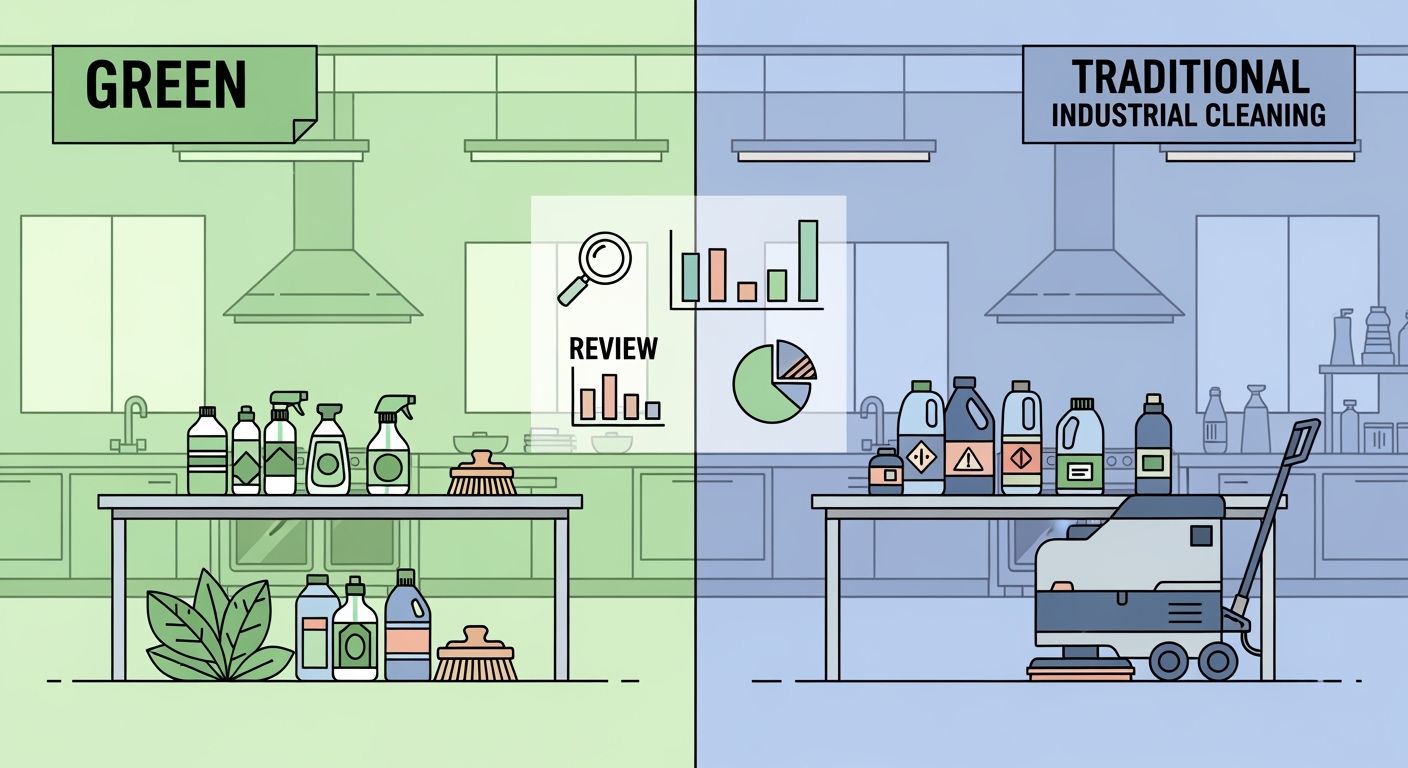
In 2026, are eco-friendly industrial kitchen cleaners truly better than their traditional counterparts, or is the choice more nuanced? Businesses face growing pressure for sustainability and operational efficiency. This blog provides an objective comparison to help you make informed decisions for your specific industrial kitchen cleaner needs. Consider effectiveness, cost, health, environmental impact, and regulatory compliance for safety and sustainability.
Key Takeaways
Eco-friendly cleaners handle daily kitchen tasks well, while traditional products remove heavy grease much faster.
Plant-based cleaners protect kitchen staff from toxic chemical fumes, severe skin burns, and bad respiratory issues.
Concentrated eco-friendly formulas save businesses money over time by reducing equipment corrosion and costly regulatory fines.
Defining Industrial Kitchen Cleaners
You need to understand the core differences between the types of industrial kitchen cleaner available. This helps you make informed choices for your facility. Each type has distinct compositions and purposes.
Traditional Cleaners: Characteristics
Traditional cleaners often rely on strong chemicals. These traditional cleaners have a long history in industrial settings. They typically contain harsh chemicals like phosphates, chlorine bleach, and ammonia. These chemicals effectively cut through grease and sanitize surfaces. However, traditional cleaning methods can leave behind strong odors and residues. Many traditional cleaners are also highly corrosive. This poses risks to both equipment and staff. You will find these traditional cleaners in many older establishments.
Green Cleaning Products: Advantages
Green cleaning products offer a different approach. These products use plant-derived ingredients. They are often biodegradable. This means they break down naturally in the environment. Green cleaning products typically have mild, natural scents. They do not leave harsh chemical residues. This makes them safer for food preparation areas. Choosing green cleaning products supports eco-friendly janitorial services. These products focus on sustainability. They are designed to be effective without the environmental impact of traditional cleaning chemicals. You get a clean kitchen with less worry about harmful substances.
Cleaning Performance: Eco-Friendly vs. Traditional
You want your industrial kitchen cleaner to perform well. You need to know how eco-friendly options stack up against traditional cleaners. This section explores their cleaning power.
Daily Cleaning and Maintenance Efficacy
Eco-friendly cleaning products excel at daily cleaning and ongoing maintenance. You can effectively remove grease, bacteria, and grime with these solutions. They keep your kitchen spotless without harsh residues. Many formulations use natural enzymes or plant-derived surfactants. These ingredients break down organic matter efficiently. You will find these products suitable for countertops, floors, and general surface wiping. Their consistent use prevents buildup. This makes your daily routine simpler. Traditional cleaning methods also handle daily tasks. However, they often leave behind strong odors. You might also worry about chemical exposure during routine use. Eco-friendly options offer a pleasant experience. They maintain a high level of cleanliness.
Heavy-Duty Stain and Grime Removal
For heavy-duty stains and rapid deep-cleaning tasks, traditional cleaners often work faster. Their strong chemicals quickly dissolve stubborn grease and baked-on food. You might find traditional cleaning solutions more aggressive. This means they cut through tough grime with less effort. Some natural formulations may require more effort for stubborn dirt, grime, and stains. You might need to apply more product or allow a longer dwell time. However, the overall effectiveness is comparable for many tasks. You can achieve excellent results with eco-friendly options. They just might demand a bit more patience or a different application technique. You can still tackle tough jobs effectively.
Disinfection and Sanitization Capabilities
Disinfection and sanitization are critical in any industrial kitchen. You must eliminate harmful pathogens to ensure food safety. Both eco-friendly and traditional cleaners offer solutions for this. Traditional cleaners often rely on bleach or quaternary ammonium compounds. These chemicals kill a wide range of microorganisms quickly. However, you must handle these chemicals carefully.
Eco-friendly options have advanced significantly. They now provide robust sanitization without the harshness. You can see the capabilities of some leading eco-friendly options:
Product Name | Active Ingredient / Source | Mechanism / Efficacy | Contact/Dwell Time | Certifications & Standards |
|---|---|---|---|---|
Benefect Botanical Disinfectant | Plant-derived Thymol | Disrupts microbial cell membranes to eliminate bacteria, viruses, and fungi | 30 seconds to 1 minute | EPA-registered kill list compliant |
Clorox EcoClean | Plant-derived active ingredients | Provides verified pathogen reduction without leaving corrosive bleach residues | N/A | Meets EPA disinfection standards |
Another powerful eco-friendly option is Hypochlorous acid (HOCl) kitchen cleaner.
Product: Hypochlorous acid (HOCl) kitchen cleaner (Envirocleanse)
Efficacy: Eliminates 99.9% of bacteria and pathogens, including E. coli and Salmonella
Safety & Usage: Safe for food-contact surfaces, free of harsh chemicals or fumes, environmentally friendly, and requires no post-application rinsing
These examples show that eco-friendly products deliver strong sanitization. They protect your staff and customers. You do not compromise on safety when choosing friendly alternatives.
Cost Efficiency: Short-Term vs. Long-Term
You must consider both immediate and future expenses when choosing industrial kitchen cleaners. This helps you understand the true cost of your cleaning regimen.
Upfront Purchase Price Comparison
You might notice that traditional cleaners often have a lower upfront purchase price. This can make them seem more appealing initially. However, this initial saving does not always reflect the total cost. You need to look beyond the sticker price. Eco-friendly cleaning products might sometimes cost a bit more at first. You should consider their long-term benefits.
Concentrated Formulations and Usage
Eco-friendly cleaning products are often more concentrated. This means you use less product for each cleaning job. You dilute these concentrated formulas with water. This leads to less product usage over time. Consequently, you achieve improved cost efficiency. You buy fewer bottles. You also reduce shipping costs and storage space. This makes eco-friendly janitorial services more economical in the long run. You get more cleaning power from less product.
Equipment Longevity and Maintenance
Traditional cleaners often contain harsh chemicals. These chemicals can corrode your kitchen equipment over time. You might face higher repair or replacement costs for your stainless steel surfaces and machinery. Eco-friendly options are typically less corrosive. They help extend the life of your valuable kitchen assets. You save money on maintenance and new equipment purchases. This contributes to significant long-term savings. You protect your investments.
Avoiding Fines and Penalties
You must comply with environmental regulations. Using eco-friendly products helps you meet these standards. You avoid potential fines and penalties associated with improper disposal of hazardous chemicals. Many traditional cleaners require special disposal methods. This adds to your operational costs. Choosing eco-friendly options reduces your environmental footprint. It also protects your business from legal issues. You also improve your public image. This shows your commitment to environmental responsibility and public health.
Health and Safety: Staff and Customers
You must prioritize the well-being of your staff and customers. The cleaners you choose directly impact their health and safety.
Chemical Exposure Risks
Traditional cleaners often contain hazardous chemicals. Over 13 million US employees, including commercial kitchen staff, regularly encounter skin-absorbable hazardous chemicals. These traditional cleaners, like oven degreasers, trigger acute skin/eye burns. They also cause headaches and severe respiratory issues from chlorine or ammonia vapors. You face increased susceptibility to skin infections through broken tissue. Peer-reviewed research links professional cleaning work directly to occupational health hazards. It shows strong statistical associations with respiratory illnesses like chronic asthma. Severe skin conditions such as hand dermatitis result from direct chemical exposure. For example, 2-Butoxyethanol in some all-in-one cleaners causes throat/lung irritation. Ammonia leads to respiratory irritation. Chlorine inhalation causes eye/nose irritation. Sodium hydroxide induces severe burns. These health risks highlight the importance of safer alternatives for employee health.
Allergen and Residue Concerns
Traditional cleaners often leave harsh chemical residues. These residues can become allergens. They may irritate customers with sensitivities. Eco-friendly options typically use plant-derived ingredients. They leave minimal or no harmful residue. This reduces allergen concerns. You create a safer environment for everyone.
Indoor Air Quality Impact
Traditional cleaning methods often release strong fumes. These fumes contain volatile organic compounds (VOCs). They degrade indoor air quality. Poor air quality can cause headaches and respiratory discomfort. Eco-friendly products generally have mild, natural scents. They release fewer VOCs. You improve the air your staff and customers breathe.
Food Safety Standards
Meeting food safety standards is non-negotiable. Both types of cleaners can sanitize surfaces. However, traditional cleaners require thorough rinsing. This removes harmful chemicals. Eco-friendly options often rinse away more easily. They leave no toxic residue. This simplifies your food safety protocols. You ensure a higher level of health protection.
Environmental Impact and Sustainability
You must consider the broader environmental impact of your cleaning choices. Your decisions affect more than just your kitchen. They influence the planet.
Biodegradability and Water Pollution
Traditional cleaners often contain harsh chemicals. These chemicals become pollutants in waterways. They have a negative impact on the environment. You release these substances into the water system. Eco-friendly cleaners, however, are biodegradable. They break down naturally. This reduces their impact on the environment. You help protect aquatic life and water quality.
Packaging and Waste Reduction
Think about the packaging. Traditional products often come in single-use plastic containers. This creates more waste. Many eco-friendly brands use concentrated formulas. They offer refill options. You reduce plastic waste significantly. Choosing these friendly options supports better waste management.
Energy Footprint of Production
The production of cleaning products uses energy. Traditional chemical manufacturing can be energy-intensive. Eco-friendly products often come from processes with lower energy demands. You contribute to overall sustainability by choosing them. This reduces the carbon footprint.
Sustainable Sourcing of Ingredients
Consider where ingredients come from. Eco-friendly cleaners prioritize sustainable sourcing. They use plant-derived ingredients. Many come from renewable resources. This supports long-term sustainability. You make a responsible choice for the planet.
2026 Regulations and Certifications
Evolving Environmental Compliance
You face stricter environmental laws in 2026. These regulations push businesses towards greener options. Governments demand reduced chemical discharge. They also require better waste management practices. This shapes the market for industrial kitchen cleaner products. You must adapt to these evolving rules.
Health and Safety Standards
Workplace safety rules are also tightening. You must protect your staff from hazardous chemicals. New standards focus on indoor air quality. They also address chemical exposure risks. This makes green cleaning products more attractive. You ensure a safer environment for your employees.
Official Ecolabels and Greenwashing
You need to identify genuinely greener cleaning products. Rely on official ecolabels. The US EPA recognizes many of these certifications. These labels help you avoid misleading environmental claims. They ensure products meet strict sustainability standards. Be wary of “greenwashing,” where companies make false eco-friendly claims.
Consumer and CSR Demands
Customers care more about environmental practices. They expect businesses to be responsible. Your corporate social responsibility (CSR) initiatives matter. Using green cleaning products improves your brand image. It meets consumer expectations. This drives demand for eco-friendly solutions.
Practical Considerations for Businesses
Auditing Current Cleaning Practices
You should first assess your current cleaning methods. Evaluate the specific products you currently use. Identify areas where you can improve efficiency and reduce waste. Look for opportunities to enhance safety for your team and customers. This initial step helps you understand your baseline. It also highlights precisely where you can make the most impactful changes for a cleaner, safer environment.
Staff Training and Implementation
Train your staff thoroughly on new products and procedures. Teach them how to use eco-friendly solutions correctly and safely. Show them proper application techniques for optimal results and minimal product waste. Explain the health and environmental benefits of these new procedures. Proper training ensures a smooth transition. It also maximizes product effectiveness and secures staff buy-in for the changes.
Phased Transition Strategies
Consider a gradual shift to new cleaning solutions. Do not change everything at once, which can overwhelm your team. Start with one specific area or product type, like floor cleaners or degreasers. Test new eco-friendly options in a controlled environment. This allows you to evaluate their performance in your unique setting. It minimizes disruption to your daily operations. This phased approach supports your long-term sustainability goals.
Measuring ROI and Impact
Track your progress diligently. Monitor cost savings from reduced product usage and improved equipment longevity. Observe improvements in staff health, such as fewer respiratory issues from reduced chemical exposure. Note any positive environmental impacts, like less water pollution. This data helps you justify your investment. It demonstrates the tangible value of your choices. You can clearly see the benefits of eco-friendly janitorial services as you move away from traditional cleaning methods.
The “better” choice is not universal. It depends on your priorities and commitment to sustainability. Both eco-friendly and traditional cleaners have merits. Traditional cleaners offer speed. You see a growing trend towards eco-friendly options. This is driven by regulations, consumer demand, and long-term savings. Evaluate your options carefully. Prioritize efficacy and environmental responsibility. Make informed, strategic decisions.
FAQ
Are eco-friendly cleaners always more expensive?
Not always. You might find eco-friendly options cost more initially. However, their concentrated formulas and long-term benefits often save you money. You also support eco-friendly janitorial services.
Can eco-friendly cleaners disinfect effectively?
Yes, they can. Many friendly products now offer robust disinfection. They eliminate harmful pathogens without harsh chemicals. You ensure a safe environment.
How do I start using eco-friendly products in my kitchen?
You can begin with a phased approach. Start by replacing one product type. Train your staff on proper usage. This ensures a smooth transition.