Choosing the right degreaser is crucial for an effective clean. You want something that works well, is safe for your family, and minimizes environmental impact. Kitchen degreaser manufacturers emphasize these factors, helping you make informed choices. Let’s dive into tips that can guide you in your cleaning journey!
Key Takeaways
Choose a degreaser with key ingredients like alkalis, surfactants, and solvents for effective grease removal.
Opt for non-toxic and eco-friendly degreasers to protect your family and the environment while cleaning.
Always read labels carefully to understand ingredients, usage instructions, and safety warnings for the best results.
Effectiveness
Key Ingredients
When it comes to choosing a kitchen degreaser, the ingredients play a vital role in its effectiveness. You want a product that can tackle all kinds of grease, whether it’s light grease from everyday cooking or heavy grease from deep frying. Here are some key ingredients to look for:
Alkalis: These are essential for breaking down grease. They work through a process called saponification, where they react with fatty acids in grease and oils. This reaction produces soap molecules that act as surfactants, trapping grease particles and making them easier to remove.
Surfactants: These ingredients help reduce the surface tension of water, allowing it to spread and penetrate grease more effectively. They help lift the grease off surfaces, making cleaning much easier.
Solvents: Some degreasers contain solvents that dissolve grease and grime. They can be particularly effective for tough buildup that other ingredients might struggle with.
Choosing a degreaser with the right combination of these ingredients ensures you can tackle any kind of grease in your kitchen.
pH Levels
The pH level of a degreaser is another crucial factor that affects its cleaning power. Most effective degreasers have a pH level above 7, which means they are alkaline. This alkalinity helps break down grease and grime more efficiently.
Alkaline Degreasers: These are great for heavy-duty cleaning. They can cut through tough grease and are ideal for kitchen appliances and surfaces that see a lot of buildup.
Neutral or Acidic Degreasers: While these can be effective for light cleaning, they may not be strong enough for heavy grease. If you often deal with medium to heavy grease, stick with alkaline options.
Always consider the surfaces you’ll be cleaning. Some materials, like natural stone or certain finishes, may react poorly to high pH levels. So, compatibility with your surfaces is key to avoiding damage while ensuring effective cleaning.
Safety
Non-Toxic Options
When it comes to cleaning your kitchen, safety should always be a top priority. Non-toxic kitchen degreasers have gained popularity for good reason. They offer effective cleaning without the harsh chemicals found in traditional options. Here’s why you might want to consider going the non-toxic route:
Advanced Formulations: Modern natural degreasers use bio-enzymatic and plant-based technologies. These can match the performance of traditional chemical degreasers for most kitchen tasks.
Evolving Chemistry: The chemistry of eco-friendly cleaners has improved significantly. Many people mistakenly believe they are less effective than their chemical counterparts, but that’s simply not true.
Hydrogen Peroxide Power: Some non-toxic cleaners use hydrogen peroxide. This ingredient breaks down grease and organic soils by penetrating molecular bonds, converting them into water and oxygen. This process effectively lifts grease off surfaces.
Using surface-safe formulas not only protects your family but also ensures a cleaner environment. You can clean confidently, knowing you’re making a safer choice.
Safety Ratings
Understanding safety ratings can help you choose the right degreaser. Look for certifications that indicate a product meets specific safety standards. Here are some of the most recognized safety certifications for kitchen degreasers:
Certification | Criteria |
|---|---|
EcoLogo | Non-toxic surfactants, No phosphates, Minimal VOCs, Readily biodegradable, Reduced aquatic toxicity |
Green Seal | Toxicity, Biodegradability, Packaging, Performance |
Safer Choice | Safety of all ingredients, Performance standards |
Each certification program has its own criteria. For example, Green Seal requires products to meet stringent standards for toxicity and biodegradability. EcoLogo focuses on human health and environmental toxicity, while the Safer Choice program mandates that every ingredient must meet safety criteria set by the EPA.
By choosing products with these certifications, you can feel confident that you’re selecting safe and effective cleaning solutions.
Remember, non-toxic degreasers are generally non-corrosive, non-toxic, and safe for all types of metal surfaces. They also have no known adverse effects on rubber and plastic compounds.
When you prioritize safety, you not only protect your family but also contribute to a healthier planet.
Environmental Impact
Eco-Friendly Choices
When you think about cleaning your kitchen, consider the impact your products have on the environment. Eco-friendly degreasers are designed to clean effectively while being gentle on the planet. Here are some options you might want to explore:
Plant-Based Ingredients: Many eco-friendly degreasers use natural ingredients derived from plants. These are often just as effective as traditional cleaners but without the harsh chemicals.
Concentrated Formulas: Look for products that offer concentrated formulas. They require less packaging and reduce waste, making them a more sustainable choice.
You can also check for certifications that indicate a product meets eco-friendly standards. Here’s a quick look at some common certifications:
Certification | Key Standards |
|---|---|
Green Seal | Emphasizes product lifecycle, sustainable sourcing, and safety for users and the environment. |
EcoLogo | Requires assessments for biodegradability, low toxicity, and efficient packaging. |
EPA’s Safer Choice | Focuses on using the safest chemical ingredients while ensuring product effectiveness. |
USDA Organic | Ensures products are free from synthetic chemicals and GMOs, emphasizing natural substances. |
Cradle to Cradle | Assesses material health, reutilization, renewable energy use, water stewardship, and social fairness. |
Biodegradable Ingredients
Choosing biodegradable ingredients is another way to make a positive impact. These ingredients break down naturally, reducing pollution and waste. When you select a degreaser with biodegradable components, you help protect aquatic life and promote a healthier ecosystem.
By opting for eco-friendly and biodegradable products, you not only ensure a cleaner kitchen but also contribute to a cleaner planet. It’s a win-win situation!
Types of Degreasers
Solvent-Based vs. Water-Based
When choosing a kitchen degreaser, you’ll encounter two main types: solvent-based and water-based. Each has its unique applications and benefits.
Water-Based Degreasers: These are perfect for everyday cleaning tasks. They work well on kitchen surfaces, countertops, appliances, and even fabrics. You’ll appreciate their mild scent and ease of use. In residential settings, they’re the go-to choice for most cleaning tasks.
Solvent-Based Degreasers: While not commonly used in homes due to their strong odors and safety concerns, these degreasers shine in commercial settings. They tackle heavy-duty cleaning, especially for tough, set-in grease stains. If you’re dealing with industrial-grade messes, solvent-based options are highly effective.
Here’s a quick comparison of their applications:
Type | Applications in Commercial Settings | |
|---|---|---|
Water-based | Suitable for everyday cleaning tasks, effective on kitchen surfaces, countertops, appliances, and fabrics without strong odors. | Milder and safer for general cleaning tasks. |
Solvent-based | Not typically used in residential settings due to strong odors and safety concerns. | Highly effective for heavy-duty cleaning, especially for tough, set-in grease stains in industrial settings. |
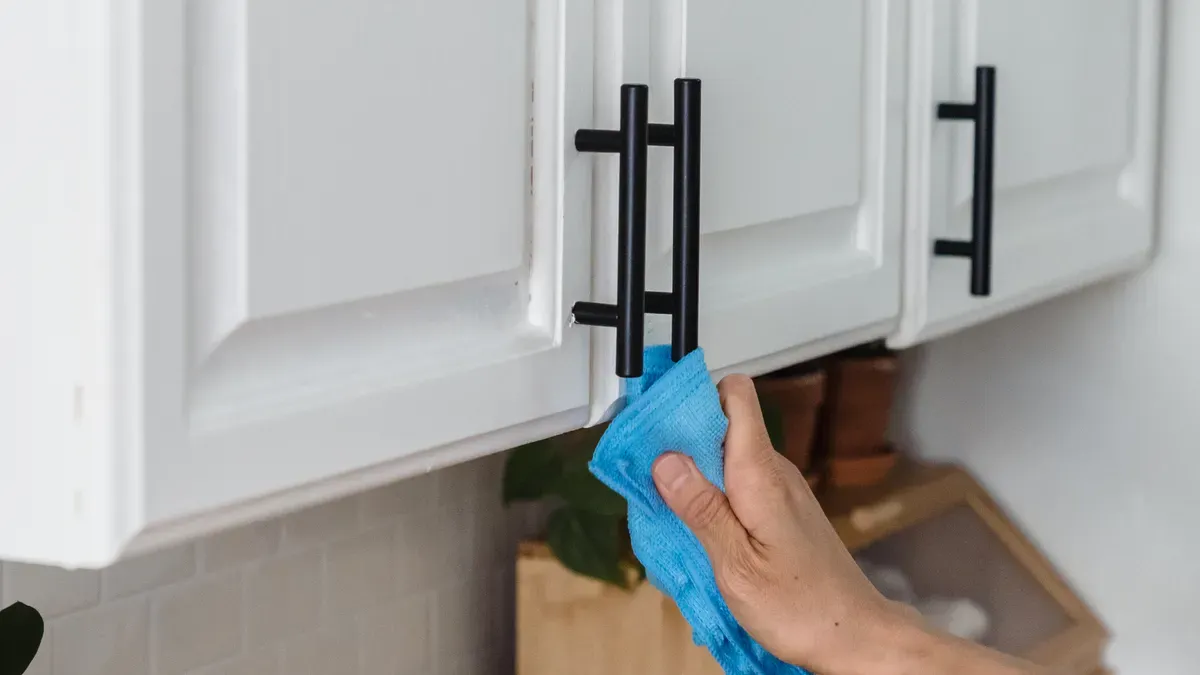
Best Degreaser for Kitchen Cabinets
When it comes to cleaning your cabinets, you want the best degreaser that won’t damage the finish. Here are some top recommendations:
Wood Cabinet Degreasers: These are specially formulated to preserve natural oils and finishes, avoiding harsh chemicals that can harm the wood.
Laminate and Thermofoil-Safe Formulas: Gentle, non-abrasive cleaners ensure you won’t damage the surface while effectively removing grease.
Stainless Steel Cabinet Cleaners: Look for cleaners with anti-streak properties to keep your stainless steel surfaces looking pristine.
Glass Cabinet Door Degreasers: Residue-free options help maintain clear visibility without leaving streaks.
Painted Cabinet Degreasers: Choose gentle formulas that maintain color vibrancy while cleaning.
By selecting the right degreaser for your cabinets, you ensure a clean and polished look without compromising their integrity.
Tips from Manufacturers
Usage Techniques
To get the most out of your kitchen degreaser, follow these manufacturer-recommended techniques. They help maintain the longevity and appearance of your surfaces:
Use the Right Product: Choose a concentrated degreaser for heavily soiled areas. These products pack a punch and can tackle tough grease cleanup.
Follow Directions: Always read the label for specific instructions. Some degreasers work best when diluted, while others are ready-to-use sprays.
Test First: Before applying a new product, test it on a small, inconspicuous area. This step ensures compatibility with your surfaces.
Use Soft Cloths: For wooden surfaces, use a wet soft tissue or suede. Avoid excessive moisture to prevent damage.
Special Care for Stone: Engineered stone surfaces need careful maintenance. Use denatured alcohol for degreasing to avoid stains.
Common Mistakes
Avoid these common mistakes to ensure effective cleaning:
Overusing Product: More isn’t always better. Using too much degreaser can leave residue and may not improve cleaning results.
Ignoring Surface Compatibility: Not all surfaces react well to every cleaner. For instance, metal surfaces should never be cleaned with abrasive solutions.
Neglecting Safety: Always wear gloves and ensure proper ventilation when using chemical cleaners. Your safety comes first!
Skipping Rinsing: After cleaning, rinse surfaces thoroughly. This step removes any leftover cleaner that could cause buildup or damage.
By following these tips, you can enhance your cleaning routine and keep your kitchen looking its best!
Choosing the Right Degreaser
Assessing Your Needs
When you’re ready to choose a kitchen cabinet degreaser, start by assessing your specific needs. Consider these factors:
Type of grease buildup: Identify whether you’re dealing with light splatters or heavy grease from frying.
Hood material compatibility: Ensure the degreaser works well with the materials of your kitchen surfaces, like wood or metal.
Safety requirements: Think about the safety of your family. If you have kids or pets, a non-toxic option might be best.
Environmental impact: Look for eco-friendly products that minimize harm to the planet.
Cost-effectiveness: Compare prices and consider the value of concentrated formulas that last longer.
By evaluating these aspects, you can narrow down your options and find the right degreaser for your cabinets.
Reading Labels
Once you’ve identified your needs, take a close look at the labels on potential degreasers. Here’s what to look for:
Ingredients list: Check for effective components like surfactants and solvents. Avoid harsh chemicals if you prefer a safer option.
Usage instructions: Follow the manufacturer’s guidelines for the best results. Some products may require dilution, while others are ready to use.
Safety warnings: Pay attention to any precautions. This information helps you use the product safely and effectively.
Reading labels not only helps you choose wisely but also ensures you use the product correctly. With the right degreaser, your kitchen cabinets will shine like new!
Choosing the right kitchen degreaser matters for effective cleaning. Focus on key factors like ingredients, safety, and environmental impact. Remember, hands-on training and practical application enhance your cleaning results. Prioritize your specific needs and preferences. Informed decisions lead to a cleaner kitchen and a healthier home!
FAQ
What is the best way to apply a kitchen degreaser?
Spray the degreaser directly on the surface, let it sit for a few minutes, then wipe with a clean cloth for best results.
Are non-toxic degreasers as effective as traditional ones?
Yes! Non-toxic degreasers use advanced formulations that match or exceed the cleaning power of traditional chemical options.
How often should I clean my kitchen with a degreaser?
Aim to clean your kitchen surfaces weekly, or more often if you cook frequently or notice grease buildup.