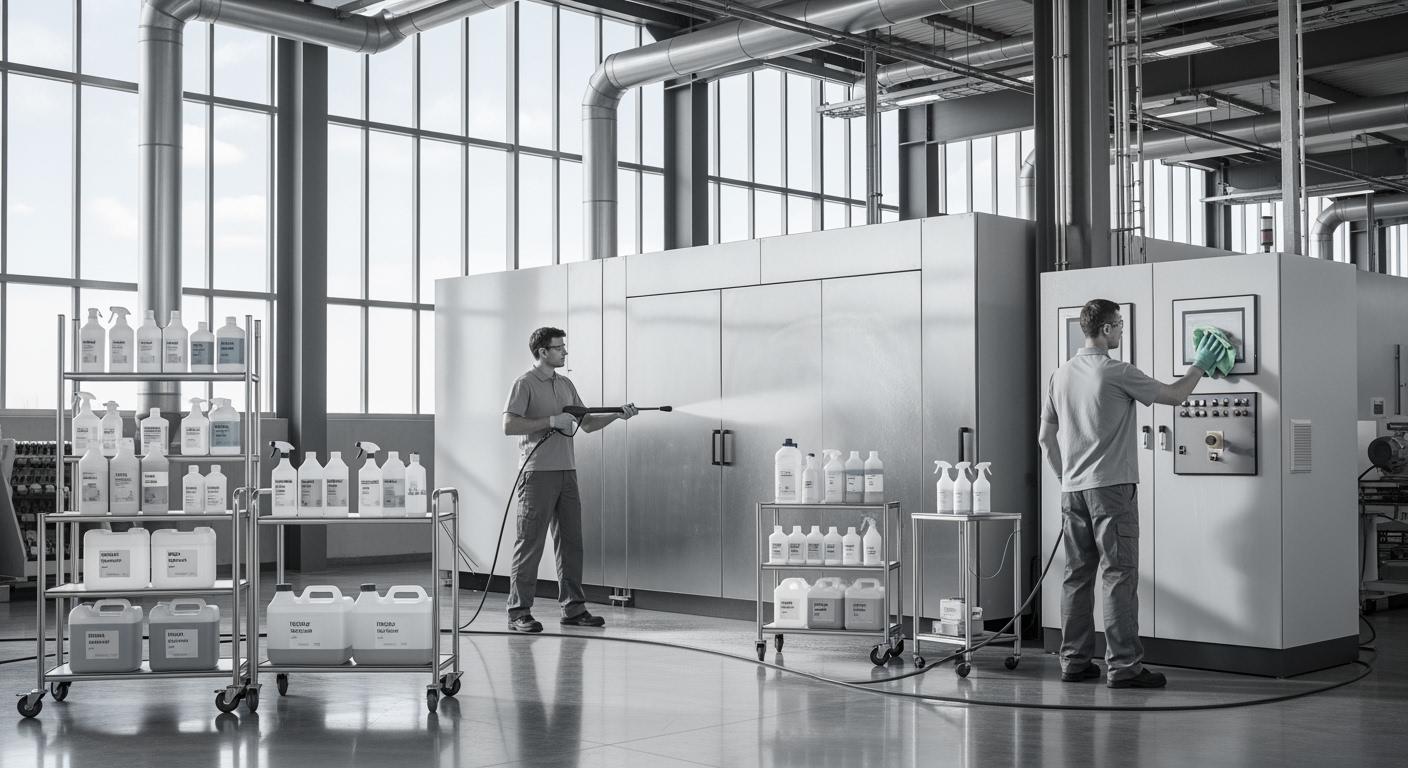
Staying updated with trends in industrial cleaning chemicals is essential for your success. You must recognize how sustainability, technology, and health compliance shape the industry. For instance, companies now prioritize eco-friendly practices and smart devices. Embracing these trends will enhance your operational efficiency and ensure compliance in a rapidly evolving market.
Key Takeaways
Prioritize eco-friendly products to reduce environmental impact and enhance your brand’s reputation.
Embrace robotics and smart solutions to automate cleaning tasks, improve efficiency, and ensure safety.
Stay informed about regulatory changes to adapt your cleaning protocols and maintain compliance with health standards.
Sustainability Initiatives
Eco-Friendly Products
You should prioritize eco-friendly products in your industrial cleaning practices. These products not only reduce environmental impact but also enhance your brand’s reputation. The shift towards sustainable practices is evident as consumers increasingly demand greener options. Many manufacturers now focus on developing cleaning solutions that utilize biodegradable ingredients and sustainable packaging.
Consider the following eco-friendly ingredients commonly found in industrial cleaning chemicals:
Ingredient | Source/Description | Cleaning Benefits |
|---|---|---|
Citric Acid | Naturally found in citrus fruits. | Dissolves hard water, soap scum, and mineral deposits. |
Thyme Oil | Natural oil from the herb thyme. | Proven to kill viruses and bacteria. |
Melaleuca Oil | Natural oil from the melaleuca alternafolia plant. | Boosts cleaning performance and penetrates tough stains. |
Glycolic Acid | Naturally found in sugar beets. | Dissolves hard water, soap scum, and mineral deposits. |
Sodium Citrate | Mineral salt derived from citric acid. | Natural alternative to synthetic stabilizers. |
Essential Oils | Variety of naturally sourced oils. | Provides an enjoyable scent experience. |
These ingredients not only perform effectively but also align with the latest trends in sustainability initiatives. By choosing eco-friendly products, you contribute to a cleaner environment and meet the growing consumer demand for sustainable practices.
Waste Reduction
Implementing waste reduction plans is crucial for manufacturers of industrial cleaning chemicals. You can adopt several strategies to minimize waste and enhance sustainability. Here are some effective approaches:
Lean manufacturing streamlines production processes, eliminating inefficiencies and reducing scrap.
Closed-loop recycling reuses by-products within the same facility, cutting costs and waste.
Renewable energy integration lowers greenhouse emissions and reliance on fossil fuels.
Sustainable sourcing of raw materials minimizes upstream waste and supports a greener supply chain.
Life Cycle Assessment (LCA) evaluates the environmental impact of products throughout their lifecycle, allowing for eco-design improvements.
Waste-to-energy conversion transforms by-products into usable energy, reducing landfill waste.
Digital monitoring and predictive maintenance extend equipment life and reduce waste from unplanned downtimes.
By focusing on sustainability initiatives, you can significantly reduce your environmental footprint while improving operational efficiency. The commitment to eco-friendly practices not only benefits the planet but also positions your business as a leader in the industry.
Latest Trends in Technology
Robotics in Cleaning
Robotics is revolutionizing the industrial cleaning sector. You can now automate repetitive tasks, ensuring consistent cleanliness across your facilities. This automation is crucial for maintaining product quality and enhancing employee safety. For instance, cleaning robots like the CLIIN robot minimize the risk of cargo contamination, which reduces potential damage claims and delays.
Here are some primary benefits and challenges associated with using robotics in industrial cleaning applications:
Benefits | Challenges |
|---|---|
Increased efficiency | High costs |
Cost savings | Technological limitations |
Improved safety | Need for skilled personnel |
While the initial investment in robotic cleaning solutions may seem high, the long-term cost savings and efficiency gains often justify the expense. As you consider integrating robotics into your cleaning practices, weigh these factors carefully.
Smart Solutions
The rise of smart cleaning technology is another significant trend shaping the future of industrial cleaning chemicals. You can leverage technological integration to enhance operational efficiency and meet the rising demand for cleanliness standards. Smart solutions offer features that streamline cleaning processes and improve overall performance.
Consider the following benefits of implementing smart solutions in your cleaning operations:
Feature | Benefit |
|---|---|
Real-Time Job Update & Reporting | Instant updates on duty completion and quick report generation reduce manual work. |
Increased Cleanliness Standards | Auto-generated analytics help monitor performance and identify areas for improvement. |
Automated Scheduling | Eliminates slow manual processes, optimizing cleaning hours and increasing productivity. |
Cloud Robotics Technology | Transforms existing manual machines into autonomous units, enhancing operational efficiency. |
Cost-Effective Solutions | Designed to resolve inefficiencies, leading to overall cost savings for cleaning companies. |
By adopting smart cleaning technology, you can transform your cleaning techniques and products, making them more efficient and effective. However, be aware of potential barriers to implementation, such as initial costs, training requirements, and compatibility issues with existing systems.
Health and Safety Compliance
Regulatory Changes
You must stay informed about the evolving regulatory landscape affecting industrial cleaning chemicals. Recent changes have significantly impacted your operations. For instance, the US EPA is establishing new PFAS standards for maximum contamination levels in drinking water. The European Commission plans to phase out all PFAS unless proven essential, including a proposed EU-wide ban on firefighting foams containing PFAS. Additionally, Asian countries like China, Japan, and South Korea are tightening PFAS regulations with specific bans and restrictions on production and use.
On December 18, 2024, the US Environmental Protection Agency issued a final rule to regulate the use of perchloroethylene (PCE). This rule bans all PCE uses in consumer products and many commercial applications within a three-year timeframe. You must adapt your cleaning protocols to comply with these regulations to avoid costly fines and ensure safety.
Safer Alternatives
As you navigate these regulatory changes, consider adopting safer alternatives to traditional cleaning products. The demand for non-toxic alternatives is rising due to environmental concerns. Here are some widely adopted options:
Plant-Based Solvents and Surfactants: These effectively break down contaminants without harmful effects.
Enzymatic Cleaners: These utilize natural proteins to break down organic materials, making them effective in industries like food processing.
Microbial Cleaners: These use microorganisms to digest contaminants, beneficial in waste management.
Training your staff on the safe handling of these products is crucial. Regular training ensures employees understand proper dilution procedures and the importance of personal protective equipment. This approach helps prevent accidents and promotes compliance with health and safety standards.
Industrial Cleaning and Maintenance Services Growth
Market Projections
The industrial cleaning and maintenance services market is poised for significant growth. You can expect a compound annual growth rate (CAGR) of 2.65% from 2025 to 2035. The market size is projected to rise from 76.99 billion USD in 2025 to 100 billion USD by 2035. Key market trends driving this growth include:
Expansion of industrial sectors
Increased regulatory compliance
Focus on sustainability practices
The rising demand for cleanliness standards, especially due to health concerns, further fuels this growth. You must stay ahead of these trends to remain competitive.
Service Provider Strategies
To thrive in this evolving market, service providers are adopting innovative strategies. Here are some effective approaches:
Specialized Programs: Tailored solutions for specific industrial needs enhance service effectiveness.
Advanced Cleaning Technologies: Utilizing the latest trends in technological integration boosts efficiency.
Environmental Responsibility: A commitment to eco-friendly practices attracts clients focused on sustainability.
Additionally, many providers implement programs such as:
Disinfection Programs: Ensuring a germ-free environment.
Comprehensive Degreaser Programs: Utilizing water-based technologies to minimize solvent reliance.
EcoSTORM & FreeFlow Wastewater Treatment Systems: Promoting sustainable waste management.
By embracing these strategies, you can differentiate your services and meet the growing demand for effective and environmentally responsible cleaning solutions.
You must embrace the key trends shaping industrial cleaning chemicals. Focus on:
Sustainability through eco-friendly products.
Technology with robotics and smart solutions.
Health compliance by adapting to regulatory changes.
These strategies enhance operational efficiency and ensure compliance with hygiene standards. Stay informed and proactive to thrive in this evolving industry. 🌱
FAQ
What are eco-friendly cleaning chemicals?
Eco-friendly cleaning chemicals use natural ingredients that minimize environmental impact. They effectively clean while being safer for users and the planet. 🌍
How can I stay compliant with new regulations?
Stay informed about regulatory changes by subscribing to industry newsletters and attending relevant workshops. Regular training for your staff also helps maintain compliance. 📚
What benefits do smart cleaning technologies offer?
Smart cleaning technologies enhance efficiency, provide real-time updates, and improve cleanliness standards. They help streamline operations and reduce manual labor. 🤖