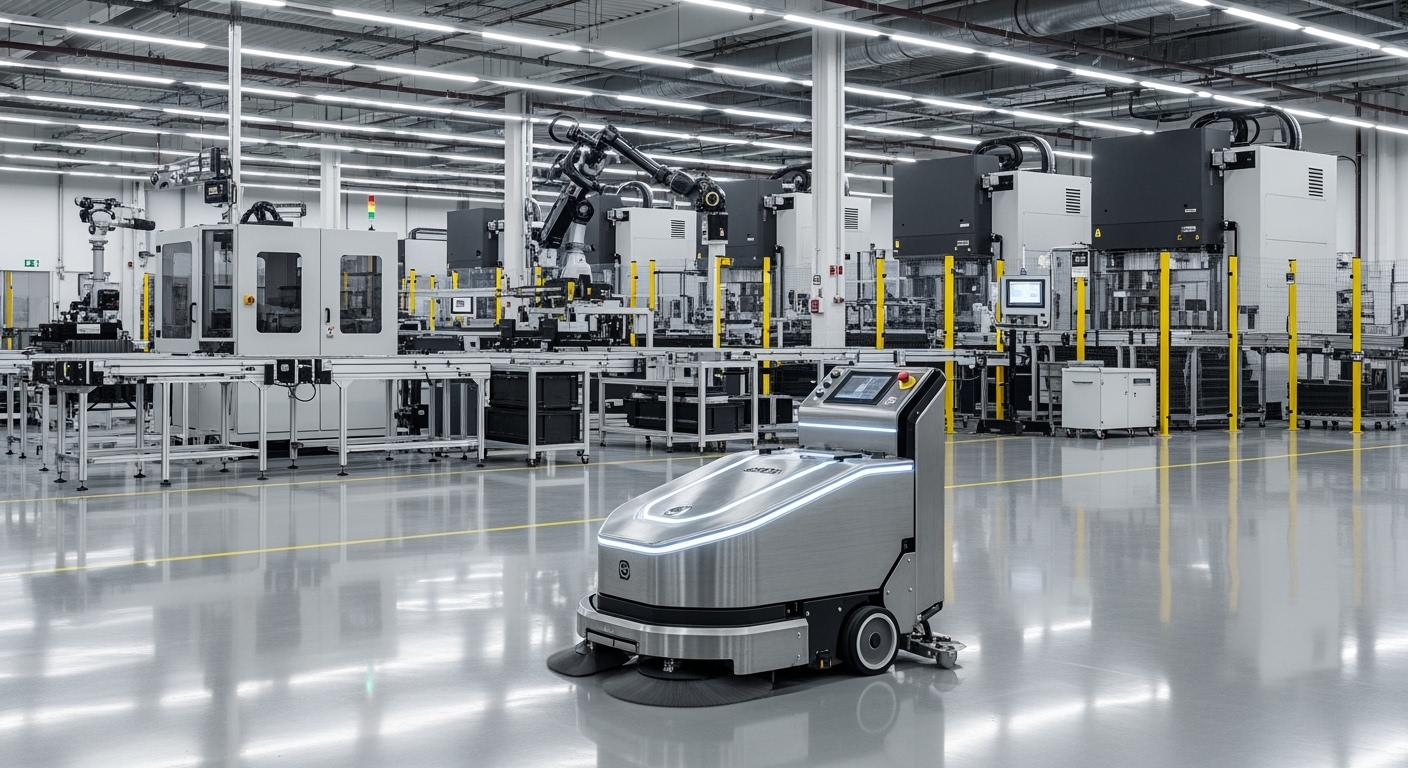
Discover the Best Industrial Floor Cleaner for Factories Today
Maintaining cleanliness in factories is essential for productivity and safety. The right industrial floor cleaner for factories can significantly impact these factors. It aids in upholding cleanliness while guaranteeing a safe working environment. For instance, features such as a compact design and user-friendly controls enhance efficiency and minimize training time. Selecting the best industrial floor cleaner for factories that suits your specific needs can result in smoother operations and a healthier workplace.
Key Takeaways
Choosing the right industrial floor cleaner boosts productivity and safety in your factory.
Understand the different types of cleaners—scrubbers, sweepers, burnishers, vacuum cleaners, and carpet extractors—to meet your specific cleaning needs.
Consider key features like size, cleaning technology, ease of use, maintenance needs, and cost to select the best machine for your facility.
Overview of Floor Cleaning Machines
Industrial floor cleaning machines are essential tools designed to keep factory floors clean and safe. These machines help you tackle various cleaning tasks, from managing spills to removing dust and debris. With their specialized designs, they can handle both quick clean-ups and extensive wet or dry cleaning jobs. This versatility makes them invaluable in any industrial setting.
You might wonder why these machines are so crucial. Well, they play a significant role in reducing dust accumulation and enhancing overall cleanliness. A clean factory not only looks better but also promotes a safer working environment. When floors are clean, you minimize the risk of slips and falls, which can lead to serious injuries. Plus, maintaining cleanliness can improve the lifespan of your equipment and machinery by preventing dirt buildup.
Using an industrial floor cleaner for factories can streamline your cleaning processes. These machines are built to handle the rigorous demands of industrial environments, ensuring that you can maintain high standards of hygiene and safety. Investing in the right floor cleaning machine can lead to smoother operations and a healthier workplace for everyone.
Remember, choosing the right industrial floor cleaner for factories tailored to your specific needs can make all the difference in your cleaning routine!
Types of Industrial Floor Cleaners
When it comes to keeping your factory floors spotless, understanding the different types of industrial floor cleaners is crucial. Each type serves a unique purpose and offers specific advantages. Let’s dive into the main categories of industrial floor cleaners you might consider for your facility.
Scrubbers
Scrubbers are powerful machines designed to clean hard surfaces effectively. They use a combination of brushes and water to scrub away dirt and grime. Here are some key benefits of using scrubbers:
Improved cleaning efficiency: Scrubbers can cover large areas quickly, making them ideal for busy factories.
Reduced slip and fall accidents: By thoroughly cleaning floors, they help minimize hazards.
Cost-effectiveness: They require fewer passes to achieve a clean floor, saving you time and resources.
Outstanding water pick-up: This feature enhances safety by ensuring floors dry quickly.
Minimized water consumption: Some models use ec-H2O technology, which reduces water usage without sacrificing cleaning power.
However, keep in mind that while scrubbers are efficient, they can be noisy. Models operate at around 67 dBA, which might disrupt your workflow during daytime cleaning.
Sweepers
Sweepers are another essential type of industrial floor cleaner. They excel at picking up loose debris, dust, and dirt from the floor. Here’s why you might choose a sweeper for your factory:
Speed: Sweepers like the Nilfisk SW250 can clean up to six times faster than manual methods. This efficiency can significantly boost productivity.
Versatility: They work well in confined spaces, making them suitable for various environments.
Cost-effective: Manual sweepers don’t have motors, which lowers operational costs compared to scrubbers that require water and detergent for deeper cleaning.
If you need a quick and efficient way to keep your factory clean, sweepers are a fantastic option.
Burnishers
Burnishers are specialized machines that polish floors to a high shine. They are perfect for maintaining the appearance of your floors and enhancing their durability. Here are some advantages of using burnishers:
Enhanced floor appearance: They give your floors a glossy finish, making them look well-maintained.
Increased durability: Regular burnishing can extend the life of your flooring by protecting it from wear and tear.
Improved safety: A shiny floor can reflect light better, improving visibility in your workspace.
Burnishers are best used on hard surfaces and should be part of your regular maintenance routine.
Vacuum Cleaners
Vacuum cleaners are essential for managing dust and debris in your factory. They are particularly useful in specific scenarios:
Scenario | Description |
|---|---|
Mobility | Ideal for quick cleanup tasks requiring easy transport. |
Specific debris types | Effective for collecting drilling or cutting debris. |
Dust removal | Useful for cleaning dust around equipment. |
Wet spills | Capable of managing wet spills efficiently. |
Vacuum cleaners are versatile and can adapt to various cleaning needs, making them a valuable addition to your cleaning arsenal.
Carpet Extractors
If your factory has carpeted areas, carpet extractors are a must-have. They specialize in deep cleaning carpets, removing stains, and eliminating odors. Here’s what makes them stand out:
Deep cleaning: They use hot water and cleaning solutions to penetrate carpet fibers, ensuring a thorough clean.
Odor removal: Extractors can eliminate unpleasant smells, leaving your carpets fresh.
Versatility: They can handle various types of carpets, making them suitable for different factory environments.
Investing in a carpet extractor can significantly improve the cleanliness and appearance of your factory’s carpeted areas.
Key Features of Industrial Floor Cleaners
When selecting an industrial floor cleaner for factories, you need to consider several key features. These features can significantly impact your cleaning efficiency and overall usability. Let’s break down what to look for.
Size and Capacity
The size and capacity of your floor cleaner matter a lot. A larger machine can cover more ground quickly, which is essential in a busy factory. However, if your space has tight corners or narrow aisles, a compact model might be more suitable. Here are some points to consider:
Coverage Area: Choose a cleaner that matches the size of your facility. Larger models are great for expansive areas, while smaller ones excel in confined spaces.
Tank Capacity: A bigger tank means less frequent refills, allowing you to clean longer without interruptions.
Cleaning Technology
The cleaning technology used in your floor cleaner can make a huge difference in effectiveness. Here are some advanced technologies to consider:
Dry Soda Blast Cleaning: This method uses compressed air to propel sodium bicarbonate particles. It effectively removes contaminants, dirt, paint, and corrosion without damaging surfaces.
Sika® Clean-10: An acid-based cleaner that serves multiple purposes, including equipment cleaning and preparing flooring surfaces for protective coatings.
These technologies enhance your cleaning capabilities, ensuring you tackle even the toughest industrial contaminants.
Ease of Use
You want a floor cleaner that’s easy to operate. Look for features that simplify the cleaning process:
User-Friendly Controls: Intuitive controls can reduce training time for your staff.
Maneuverability: Machines with swivel wheels or compact designs allow for easier navigation around obstacles.
An easy-to-use cleaner can save you time and effort, making your cleaning routine more efficient.
Maintenance Needs
Regular maintenance is crucial for keeping your industrial floor cleaner in top shape. Here are some maintenance considerations:
Routine Checks: Regularly inspect your machine for wear and tear. This helps catch issues before they become costly repairs.
Material Considerations: Different types of debris require specific maintenance. For example, a larger wet/dry machine is more efficient for mixed debris, potentially lowering your long-term maintenance costs.
Investing in durable components can extend the life of your machine, reducing overall ownership costs. Technologies like ec-H2O NanoClean™ also minimize water consumption, further cutting operational costs.
Cost Considerations
Finally, consider the cost of the industrial floor cleaner for factories. While it’s tempting to go for the cheapest option, think about the long-term value. Here are some factors to weigh:
Initial Investment vs. Long-Term Savings: A higher-quality machine may cost more upfront but can save you money in maintenance and operational costs over time.
Efficiency: Machines that clean effectively in fewer passes can save you time and resources, making them more cost-effective in the long run.
By carefully evaluating these features, you can choose the right industrial floor cleaner that meets your factory’s specific needs.
Comparing Popular Models
When it comes to choosing the right industrial floor cleaner, comparing popular models can help you make an informed decision. Let’s take a closer look at some top models in each category.
Scrubber Models
Scrubbers are essential for deep cleaning. Here are two popular models:
Model A: Known for its efficiency, this scrubber covers large areas quickly. It’s user-friendly and has a compact design.
Model B: This model features advanced cleaning technology, making it ideal for tough stains. However, it can be a bit noisy during operation.
Sweeper Models
Sweepers excel at picking up loose debris. Here’s how two leading models stack up:
Model | Cleaning Performance | Operational Cost Features |
|---|---|---|
SW 250 | Not specified in detail, but noted for efficiency and cost-saving features. | Not specified in detail. |
SC 500 | Designed to improve productivity with features like Nilfisk SmartFlow™ for optimized cleaning. | Reduces cleaning costs through Ecoflex™ system and SilenTech™ technology for daytime cleaning. |
Both models offer great performance, but the SC 500 stands out with its innovative features that enhance productivity.
Vacuum Cleaner Models
Vacuum cleaners are vital for managing dust and debris. Here’s a comparison of some popular models:
Model | Power Source | Tank Capacity | Suction Performance | Features |
|---|---|---|---|---|
BOSCH GAS 12-25 | Corded | High | High | Workshop-style cleanup |
BOSCH GAS 15 | Corded | Standard | General wet/dry | Maintenance and site work |
MAKITA DVC750LZX3 | Cordless | Standard | Portable | Cordless portability |
MAKITA VC2000L | Corded | Large | High | Larger tank format |
MAKITA DUB187Z | Cordless | N/A | N/A | Blower and vacuum functionality |
The BOSCH GAS 12-25 offers high suction power, making it perfect for heavy-duty tasks. On the other hand, the MAKITA DVC750LZX3 provides the convenience of cordless operation, which is great for mobility.
By comparing these models, you can find the right industrial floor cleaner that fits your factory’s needs. Each model has its strengths, so consider what features matter most to you!
Choosing the right industrial floor cleaner is crucial for your factory’s efficiency and safety. Assess your specific needs before making a purchase. Remember, investing in durable components can extend machine life and reduce ownership costs. Effective cleaning means safer floors and a healthier work environment for everyone.
FAQ
What should I consider when choosing an industrial floor cleaner?
Consider your factory’s size, the type of flooring, and the specific cleaning tasks you need to tackle.
How often should I clean my factory floors?
You should clean your factory floors regularly, ideally daily or weekly, depending on foot traffic and the nature of your work.
Are industrial floor cleaners expensive to maintain?
Maintenance costs vary by model, but investing in quality machines often leads to lower long-term expenses.