【Industrial Cleaning】
How to Choose the Right Method for Industrial Oil Stain Removal?
The widespread application fields of industrial oil cleaning agents
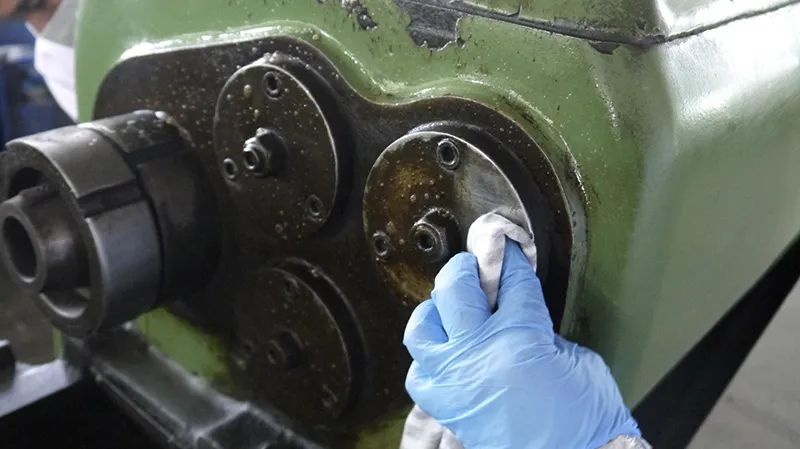
Industrial oil cleaning agents are widely used in fields such as machine processing, industrial manufacturing, electronics and electrical appliances, precision parts processing in the hardware industry, automotive maintenance, heat transfer and heat exchange systems, and cleaning and maintenance of industrial and civilian equipment. In addition, they are also applied in pre-treatment cleaning, such as before electroplating, before coating, and during intermediate stages of heat treatment.
The degree of cleaning effectiveness (the degree of cleanliness). Usually, the time it takes for the product to penetrate, separate, emulsify oil stains, and the cleanliness can be evaluated during use.
Therefore, when choosing a cleaning agent for use, multiple details should be comprehensively considered to meet the requirements in terms of cleaning effectiveness (cleanliness), compatibility of the cleaning material with the surface, applicability to the cleaning object, feasibility of cleaning conditions, safety and environmental protection of the product, precautions, and cost-benefit ratio.
Generally, the following points can be referred to:
The degree of cleaning effectiveness (the level of cleanliness). Usually, the time it takes for the product to penetrate, separate, emulsify and remove oil stains can be observed to assess the cleanliness.
Compatibility with cleaning material surfaces. Before applying the cleaning agent, it is necessary to clearly understand the specific material properties or surface coatings of the materials (such as stainless steel, aluminum, copper, alloys, plastics, etc.) that will come into contact with the material. The cleaning agent should be compatible with the materials and should not cause corrosion, oxidation, or discoloration after cleaning.
Applicability of the cleaning object. The substances contained in the cleaning object can be roughly classified into: types for removing grease, removing rust or oxide layers, the severity of oil stains (oil sludge, high-temperature coking oil lumps, oil deposits), carbon deposits, and oil mixture, etc. The product can effectively be compatible with the cleaning object and perform cleaning accordingly.
The feasibility of cleaning conditions. There are numerous types of oil stain cleaning agents available on the market, and their prices vary according to different cleaning conditions. Based on the cleaning conditions, they can be classified into various methods such as ultrasonic cleaning, spray cleaning, scrubbing, hot soaking cleaning, and drum cleaning, etc. Therefore, choosing a product that meets your own cleaning methods is crucial.
Product safety and environmental friendliness, as well as precautions. Before making a choice, it is necessary to inquire with the manufacturer about their precautions (storage conditions of the product, protective measures, cleaning parameters, usage instructions, safety, etc.). At the same time, consider the environmental standards of the enterprise or related industries for selection.
Cost and performance. It is not recommended to overly pursue low prices. After all, you get what you pay for. Water-based oil stain cleaning agents can be reused, do not evaporate, can be mixed with a certain proportion of clean water, and have relatively lower costs.